2026-10-24 ·
Local Guide to Chimney Flue Repairs After Heavy Snowfall
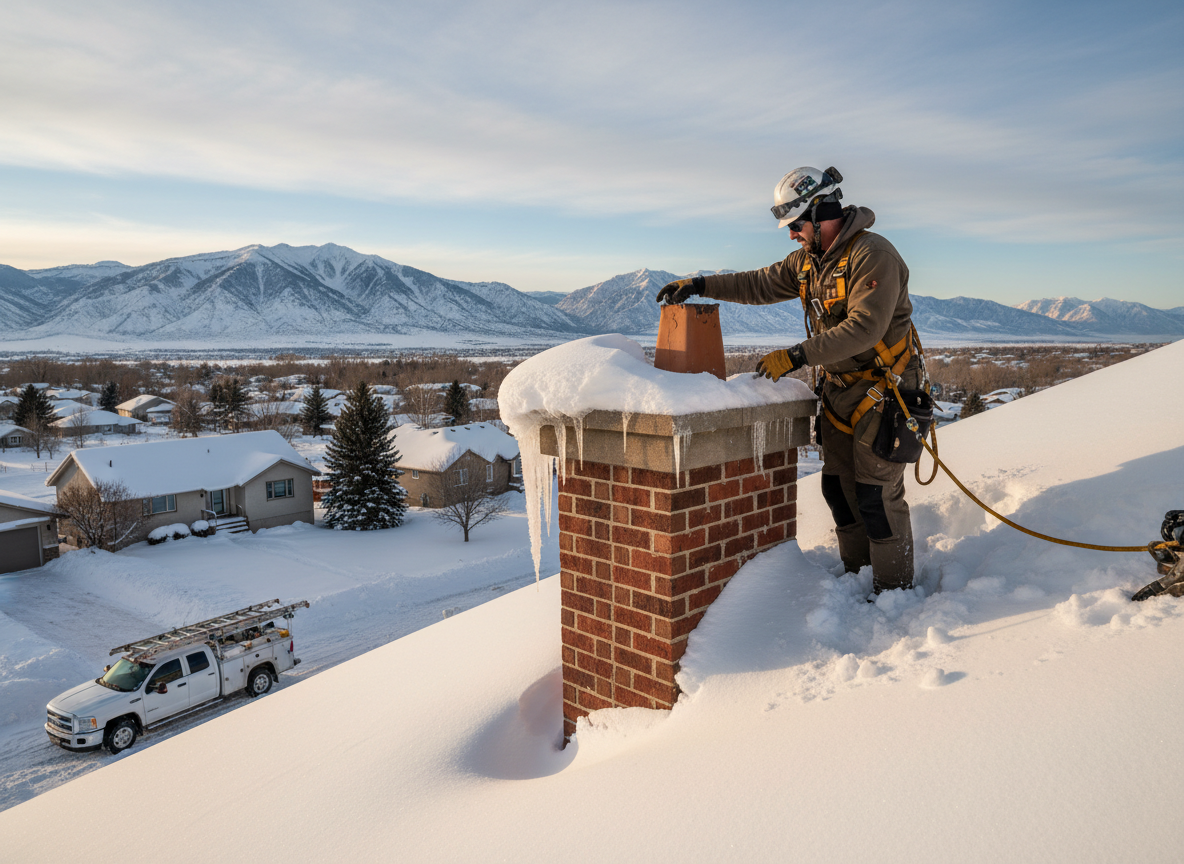
After heavy snowfall in American Fork, chimney flue repairs center on clearing ice blockages and sealing water intrusion points before melt cycles worsen masonry cracks. Local homes in North American Fork and South American Fork face repeated freeze-thaw stress because winters drop below freezing while the semi-arid climate brings sudden warm spells that send water down flues.
Common Flue Damage Patterns in American Fork
Snow accumulation around American Fork Canyon and near Timpanogos Cave funnels extra moisture into flues when roofs shed loads. Ice forms inside the flue liner, expands, and spalls brick or mortar joints common in older housing stock throughout Downtown American Fork. Meltwater then seeps past damaged flashing, staining ceilings in homes built before modern waterproofing standards. Residents in Pleasant Grove and Highland report similar patterns after storms that drop more than eight inches, because the cold winters here alternate with daytime thaws that drive water deeper into the structure. These cycles shorten flue lifespan by several years if left unaddressed.
Assessing Damage After Snow Melts
Start inspection once daytime temperatures rise above freezing for two consecutive days. Check for white efflorescence on exterior brick, which signals repeated moisture movement through the flue. Inside, look for dark streaks along the damper or smoke chamber that indicate water has bypassed the liner. Homeowners in the American Fork Canyon area often notice draft issues first because snow weight can shift crown caps and allow debris to fall. A thorough check includes verifying that the flue is clear of ice dams formed during the storm. Document any cracks wider than one-eighth inch, as these require immediate attention to stop further spalling during the next freeze.
Repair Steps for Snow-Related Flue Issues
Remove loose debris and ice with hand tools before any masonry work begins. For minor mortar loss, tuckpointing restores the joint integrity without full rebuilds. When water has penetrated the liner, chimney relining creates a new barrier that handles future melt cycles common in Utah winters. Leaks around the crown call for targeted chimney crown repair using compatible materials that match the original construction found in Lehi and Pleasant Grove homes. After repairs, chimney waterproofing reduces absorption on exposed surfaces. These steps prevent recurring problems tied to the region's cold winters and sudden temperature swings.
Preventing Recurring Problems
Schedule annual inspections before the first snow forecast to catch small cracks early. Keep the area around the chimney clear of snow piles that trap moisture against the flue. Homes near American Fork City Hall benefit from checking roof pitch and flashing condition each fall, since steep roofs shed snow faster and increase water volume entering any existing gaps. Pairing repairs with seasonal chimney maintenance reduces creosote and ice interactions that accelerate damage. Owners in Highland and Alpine also install proper caps rated for high-wind gusts that accompany winter storms in this county.
When to Call for Professional Help
Persistent draft problems or visible interior staining after a melt event require on-site evaluation. 24/7 availability at 775 Grassland Dr, American Fork, UT 84003 allows response during active weather when flues are still accessible. Technicians familiar with local brick and stone chimneys can distinguish between cosmetic surface cracks and structural movement caused by repeated ice expansion. Early intervention keeps repair scope limited to the flue rather than full masonry restoration later in the season.