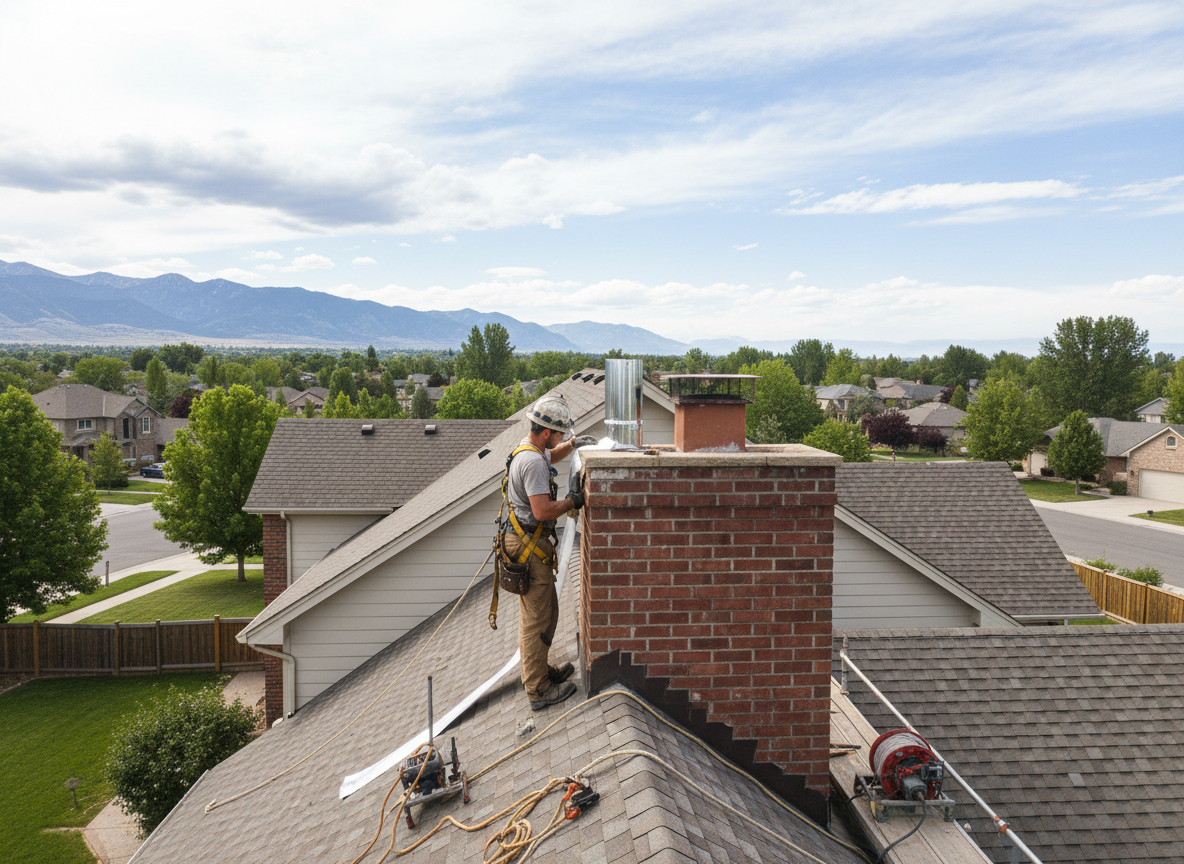
American Fork's cold winters bring repeated freeze-thaw cycles that crack clay flue tiles in homes built before the 1990s, especially in Downtown and North American Fork where many original chimneys still serve single-story ranch houses. Relining restores a continuous, code-compliant flue without full masonry rebuilds. Stainless steel or cast-in-place liners are chosen based on fuel type and chimney height, with attention to the steep terrain near American Fork Canyon that often limits equipment access and requires rope-and-pulley setups.
Nearby Lehi and Pleasant Grove share the same semi-arid conditions, yet American Fork Canyon properties see heavier snow load and wind-driven rain that pushes moisture behind liners. We inspect for creosote glazing common after hot summer burns followed by sudden cold snaps, then select liner diameter to maintain draft without oversized gaps that collect debris. Homes near Timpanogos Cave and American Fork City Hall often have narrow chaseways that demand flexible liners rather than rigid sections.
Utah code requires proper clearances and termination height above the roofline; we verify both during every reline to avoid carbon monoxide issues in tightly sealed newer construction in Highland and South American Fork. Edge cases include shared flues in duplexes and the occasional masonry crown failure from alkaline soil salts that erode mortar at ground level. All work starts with a camera scan from the 775 Grassland Dr shop before any material is ordered.
Technician insight
In American Fork the thing that catches most people out with chimney relining is how quickly freeze-thaw cycles open new cracks in clay tiles once the old liner is removed, especially on homes near American Fork Canyon where wind funnels moisture straight down the flue. We see it every winter in Downtown and North American Fork ranches built in the 1970s.
South American Fork Ranch Relining
Homeowner noticed draft issues after a cold snap. Camera showed multiple cracked tiles and heavy creosote in a 1978 chimney. We installed a 6-inch insulated stainless liner sized for the wood stove, sealed the crown, and restored draft. House passed smoke test the same afternoon.
How it works
- 1
Initial Camera Inspection
We scope the flue from roof to firebox, noting tile cracks, creosote buildup, and offset angles common in American Fork's older ranch homes.
- 2
Flue Preparation
Loose debris and glazing are removed so the new liner bonds cleanly; access routes around American Fork Canyon properties are planned to protect landscaping.
- 3
Liner Installation
Stainless steel or cast-in-place material is installed with proper insulation, sized for the appliance and local wind patterns that affect draft.
- 4
Final Testing and Cleanup
Smoke testing confirms draft, then the site is restored; 24/7 scheduling allows same-day completion when weather windows open in winter.
Pricing
Pricing varies by chimney height, liner material, and access difficulty in canyon or older neighborhood homes; upfront quote after inspection.