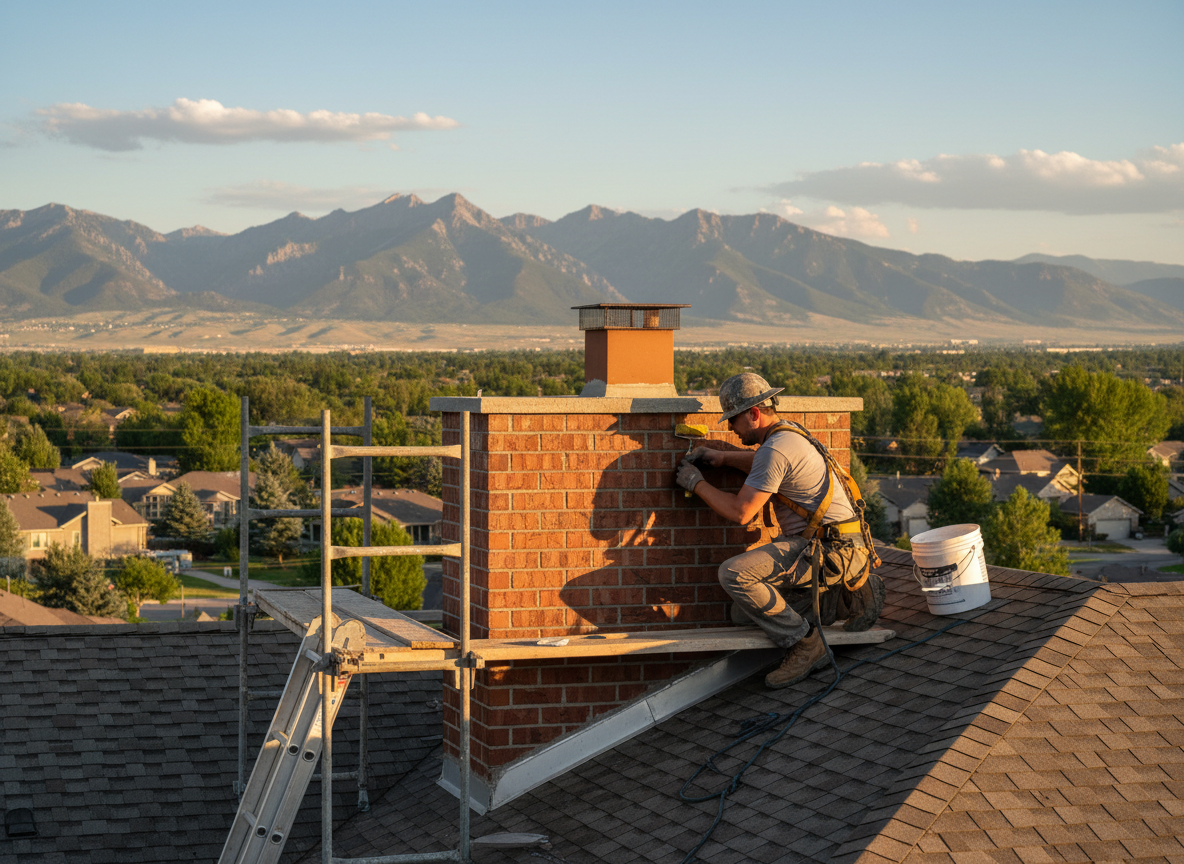
American Fork sits in a semi-arid zone where summer heat bakes masonry then winter cold drives freeze-thaw cycles that open hairline cracks in chimney crowns and joints. Homes in Downtown American Fork and older stock near American Fork City Hall often carry decades-old brick that absorbs moisture from snowmelt running off Timpanogos Cave slopes. Without proper waterproofing, water reaches flue liners and causes spalling that shows up first as interior staining during spring thaws. We use breathable silane-siloxane sealers that penetrate without trapping vapor, applied only after power-washing and crack repair so the treatment lasts through the next seasonal swing.
Edge cases appear regularly on properties backing American Fork Canyon where wind-driven rain and drifting snow hit the north face harder than homes in Lehi or Pleasant Grove. Chimneys with clay flue tiles or stone veneer require different prep than standard brick because the mortar lines expand at different rates. We never seal over active leaks or uncured masonry; doing so traps moisture and accelerates damage when temperatures hit the nineties again. Utah building practices in Highland and North American Fork also mean many chimneys tie into cathedral ceilings, so we check attic ventilation before any top-side coating to avoid condensation issues that mimic waterproofing failure.
Improper DIY coatings often fail within two seasons here because they lack the elasticity needed for daily temperature swings of forty degrees. We inspect flashing integration at the roofline and crown slope first, then address any missing cricket or cap before the sealer goes on. This sequence prevents water from bypassing the waterproofing layer entirely, a common issue on split-level homes in South American Fork where roof transitions collect debris and ice dams.
Technician insight
In American Fork, the thing that catches most people out with chimney waterproofing is how quickly canyon wind packs snow against the north side of chimneys on older Downtown homes, then the next warm spell sends meltwater straight into micro-cracks that formed during the last freeze.
Persistent Leak on North-Facing Chimney
Problem: Water stains appeared on the ceiling after a January thaw in a South American Fork house. What we found: Open joints and a flat crown that held snowmelt on a 1980s brick chimney. What we did: Repointed the joints, sloped the crown, then applied two coats of breathable sealer. Outcome: No further moisture entry through the following winter.
How it works
- 1
Site Inspection
We examine crown, flashing, and masonry condition from roof and attic on homes across American Fork neighborhoods.
- 2
Surface Preparation
Power washing removes lichen and loose mortar, followed by tuck-pointing any open joints before sealing.
- 3
Sealer Application
Breathable masonry sealer is applied in two coats during suitable temperatures to ensure full penetration.
- 4
Final Check
We verify coverage and test drainage at the crown, then document the work for the homeowner.
Pricing
Upfront quotes after inspection; cost varies with chimney height, access, and existing damage.