2026-10-24 ·
How to Check Your Chimney for Ice Damage After American Fork Winters
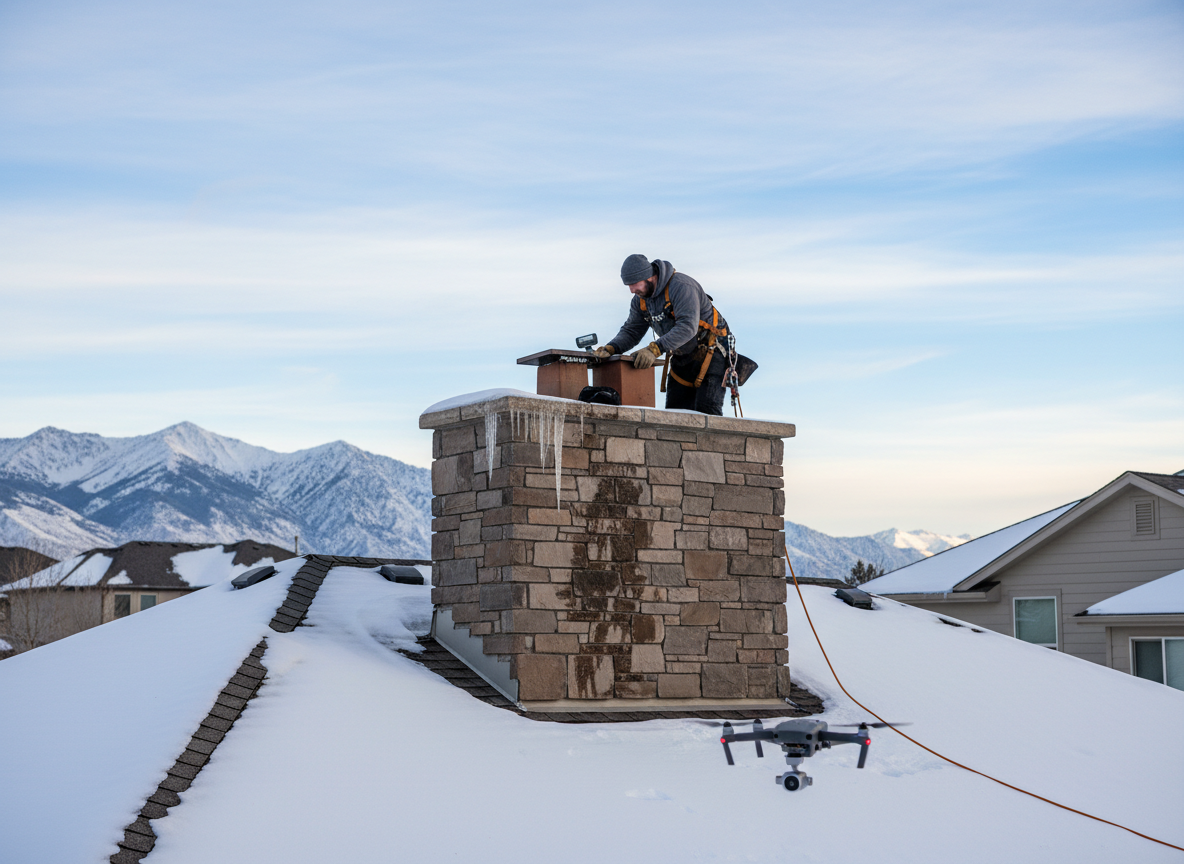
Begin your inspection by examining the chimney exterior from the ground and roof edges for new cracks wider than 1/8 inch, loose bricks, or white efflorescence stains that signal moisture from melted ice refreezing inside the masonry. American Fork's cold winters, with temperatures often dropping below freezing after daytime thaws in the semi-arid climate, create repeated expansion that damages older brick chimneys common in Downtown American Fork and North American Fork neighborhoods.
Exterior Masonry and Mortar Checks
Walk around the base and note any bulging or leaning sections, especially on chimneys serving homes built before 1980 in South American Fork where original mortar has aged. Look closely at joints for missing or crumbling mortar that ice has pushed outward. In the American Fork Canyon area, wind-driven snow adds extra moisture that seeps into tiny fissures and expands overnight. Check flashing where the chimney meets the roof for gaps that allow water entry during spring melts. Document photos of any spalled brick faces, which appear as flaking layers after several freeze cycles. These visible clues often appear first on the north-facing side exposed to less sun and more persistent ice.
Crown, Cap, and Flue Top Inspection
Climb safely or use binoculars to inspect the crown for hairline cracks or missing sealant around the flue tile. Ice forms on the crown during overnight freezes common after American Fork storms and pries apart the concrete cap over time. Verify the chimney cap remains secure and undamaged, as a loose cap lets snow accumulate inside the flue where it melts and refreezes against the liner. In Pleasant Grove and Highland homes with similar elevations, heavy snow loads increase this risk. Note any white staining or vegetation growth on the crown that indicates trapped moisture from winter cycles.
Interior and Attic Signs of Hidden Damage
Inside the home, check the fireplace firebox for damp smells or white powder on bricks after lighting a test fire, signs that ice melt has reached the liner. Examine attic framing around the chimney chase for water stains or mold, which develop when ice-damaged mortar allows seepage during thaws. Older homes near American Fork City Hall often have single-wall flues more prone to this issue than modern lined systems. Compare your findings against seasonal patterns where March thaws reveal damage hidden under winter snow.
Next Steps After Your Checks
If cracks exceed 1/4 inch or interior moisture appears, schedule a chimney inspection service for closer evaluation with proper tools. Review the Local Guide to Chimney Flue Repairs After Heavy Snowfall for repair details specific to Utah winters. Homeowners in Lehi and nearby areas can also read How Utah's Dry Air Affects Chimney Masonry Over Time to understand long-term effects on local brickwork. Address issues promptly to prevent further structural compromise from repeated freeze-thaw cycles.