2026-10-24 ·
What Causes Creosote Buildup in Utah Chimneys During Cold Months
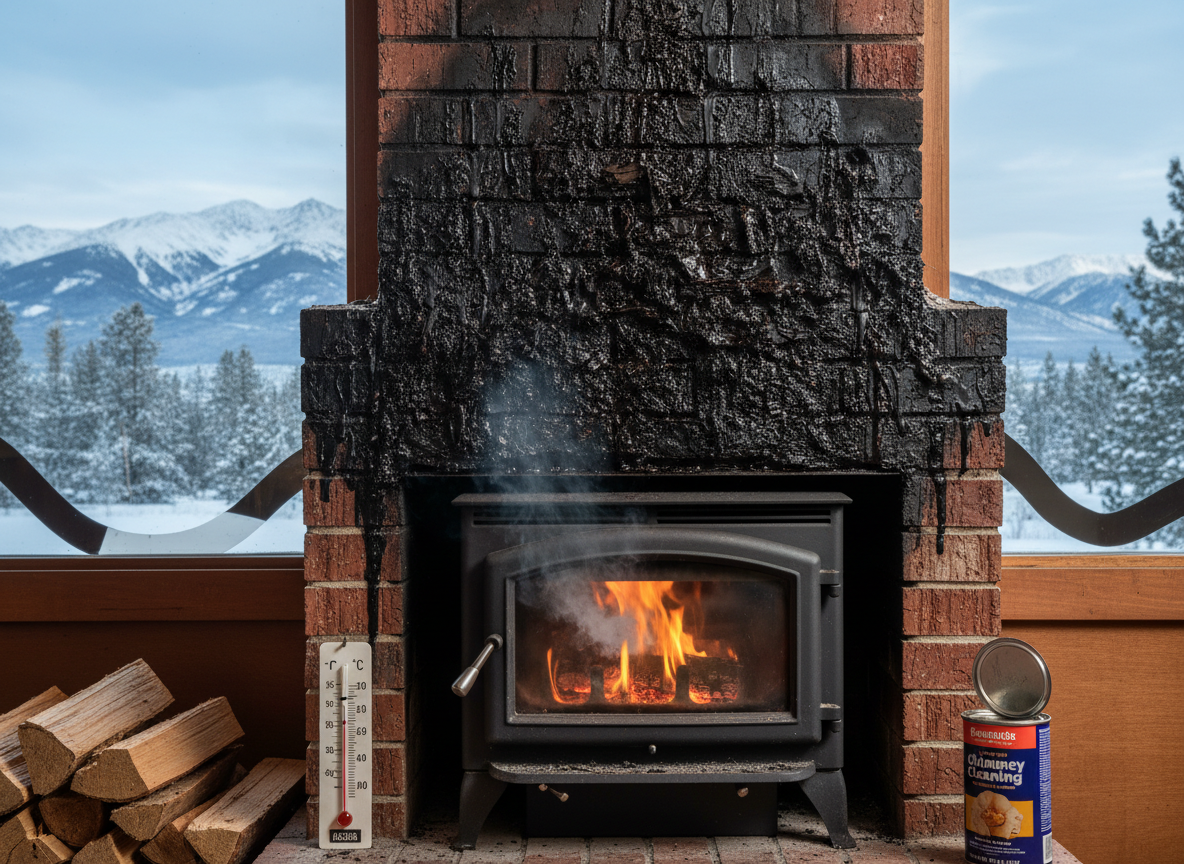
Creosote buildup in Utah chimneys during cold months stems mainly from incomplete wood combustion paired with flue temperatures below 250°F that cause unburned vapors to condense on flue walls. In American Fork this happens often once winter temperatures drop and homeowners run fires longer each day.
Low Flue Temperatures in Utah Winters
American Fork experiences semi-arid climate with cold winters that pull flue temperatures down fast after sunset. When outdoor air sits near freezing, the chimney stack loses heat rapidly and stays below the 250°F threshold needed to keep creosote in vapor form. Homes in North American Fork and the American Fork Canyon area see this effect sooner because higher elevation brings sharper overnight drops. Older brick chimneys common throughout Downtown American Fork lose heat through mortar joints, keeping the entire flue cooler than newer metal systems. Each time the fire dies back, the cooling cycle repeats and fresh layers of creosote form.
Wet or Unseasoned Firewood Choices
Many American Fork residents source firewood locally, yet wood cut the same season often retains 20-30% moisture. Burning that wood forces the fire to use energy evaporating water instead of reaching full combustion temperatures above 1100°F. The resulting smoke carries more unburned particles that condense as creosote once they hit the cold flue. Pleasant Grove and Highland homeowners who store wood outdoors without proper cover report faster buildup during the first cold snap of the season. Keeping moisture below 20% measured with a simple meter cuts the creosote load noticeably.
Restricted Airflow in Local Housing Stock
Homes built before 1990 in South American Fork and around American Fork City Hall often have smaller flue diameters and older dampers that limit draft. When airflow drops, oxygen supply to the fire decreases and combustion stays incomplete. Creosote then deposits faster because the smoke lingers longer in the flue. Adding a chimney cap installation helps maintain steady draft even when winter winds swirl around Timpanogos Cave ridges. Regular inspection reveals whether damper seals or flue restrictions are the main culprit before the next cold front arrives.
How Cold Months Accelerate Layering
Each time temperatures fall below freezing, the condensation point inside the flue moves lower and stays there longer. American Fork residents who burn fires for six or more hours nightly see three distinct creosote layers form within a single week. The first layer is light and flaky; repeated cold cycles turn it into hard, glazed deposits that resist normal brushing. Nearby cities such as Lehi report the same pattern once snow lingers on roofs and blocks solar warming of the chimney stack. Monitoring flue temperature with a simple probe helps time cleanings before the third layer hardens.
Homeowners in American Fork who notice these patterns benefit from scheduling chimney cleaning service before the next cold spell. The seasonal chimney maintenance checklist for American Fork homes outlines exact steps to keep flue temperatures higher and reduce moisture. Checking the related guide on how Utah's dry air affects chimney masonry over time shows why sealing mortar joints also slows heat loss that feeds creosote formation.