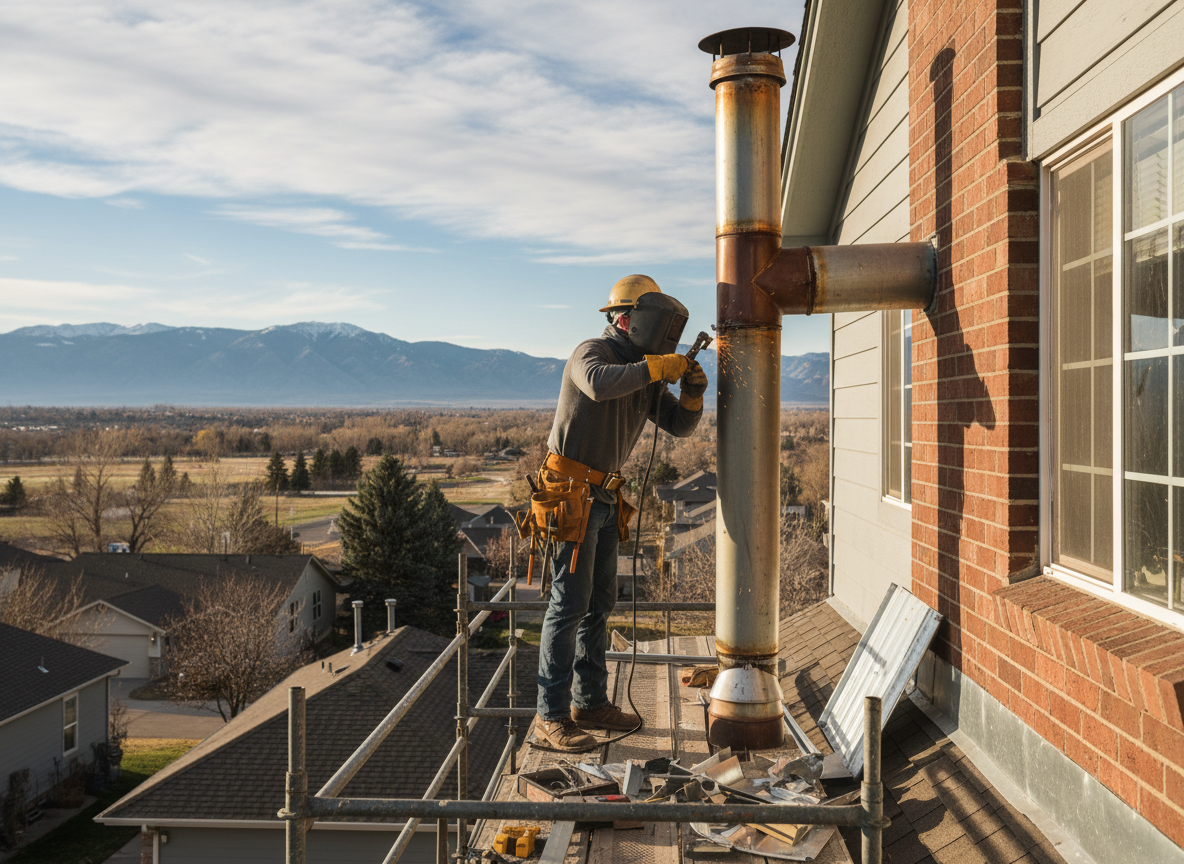
Metal chimneys in American Fork take a beating from the semi-arid climate's hot summers followed by sudden cold winters. Temperature swings cause the metal to expand and contract, loosening seams and flashing around the chase. Homes in North American Fork and the American Fork Canyon area often have older metal liners that develop pinhole leaks where wind-driven rain and snow sit against the pipe. We inspect the entire run from hearth to cap, checking for creosote buildup that accelerates corrosion on the interior walls.
South American Fork neighborhoods and nearby Lehi and Pleasant Grove see more two-story homes with exterior metal chimneys exposed to direct afternoon sun and canyon gusts. These units commonly develop warped sections where the metal has fatigued. Repair work here requires cutting out damaged lengths and fitting new stainless sections with proper slip joints so the chimney can still move without cracking the roof flashing. We always verify clearances to combustibles remain code-compliant after any section replacement.
Terrain around Timpanogos Cave and the canyon brings higher moisture during spring melt, which pools at the base of metal chimneys if the spark arrestor is clogged. That standing water rusts the lower elbows fastest. Our repairs include replacing those elbows with heavier-gauge material and adding a proper drip edge so water sheds away from the house instead of running back down the pipe.
We never assume a simple patch will hold on metal systems installed before the 2000s because the original metal thickness is often thinner than current standards. Full section replacement or liner insertion is frequently the only lasting fix once pitting starts.
Technician insight
In American Fork, the thing that catches most people out with metal chimney repair is how quickly canyon winds push snow under the flashing on south-facing roofs. Once that moisture sits against the pipe through a cold snap, the lower elbows rust from the inside out and homeowners think a new cap will fix it when the real issue is three feet lower.
Warped Elbow on Canyon Home
A metal chimney on a home near American Fork Canyon showed visible bowing at the elbow after several hard freezes. We found the original 24-gauge pipe had thinned from repeated expansion and trapped meltwater. We removed the damaged elbow, installed a heavier 20-gauge replacement with an added drip edge, and sealed the roof transition. The system passed smoke testing and restored proper draft.
How it works
- 1
Initial Inspection
We examine the full metal chimney from roof to firebox, noting seam condition, flashing integrity, and any visible rust or warping.
- 2
Damage Assessment
Measurements are taken of affected sections and compared against current code clearances for the specific roof pitch found on American Fork homes.
- 3
Section Replacement
Damaged metal lengths are cut out and new stainless sections are fitted with sealed joints rated for the temperature swings common here.
- 4
Final Testing
A smoke test confirms draft and verifies no exhaust is escaping at repaired seams before we leave the site.
Pricing
Upfront quotes provided after on-site inspection; final cost depends on chimney height, number of sections replaced, and roof access.