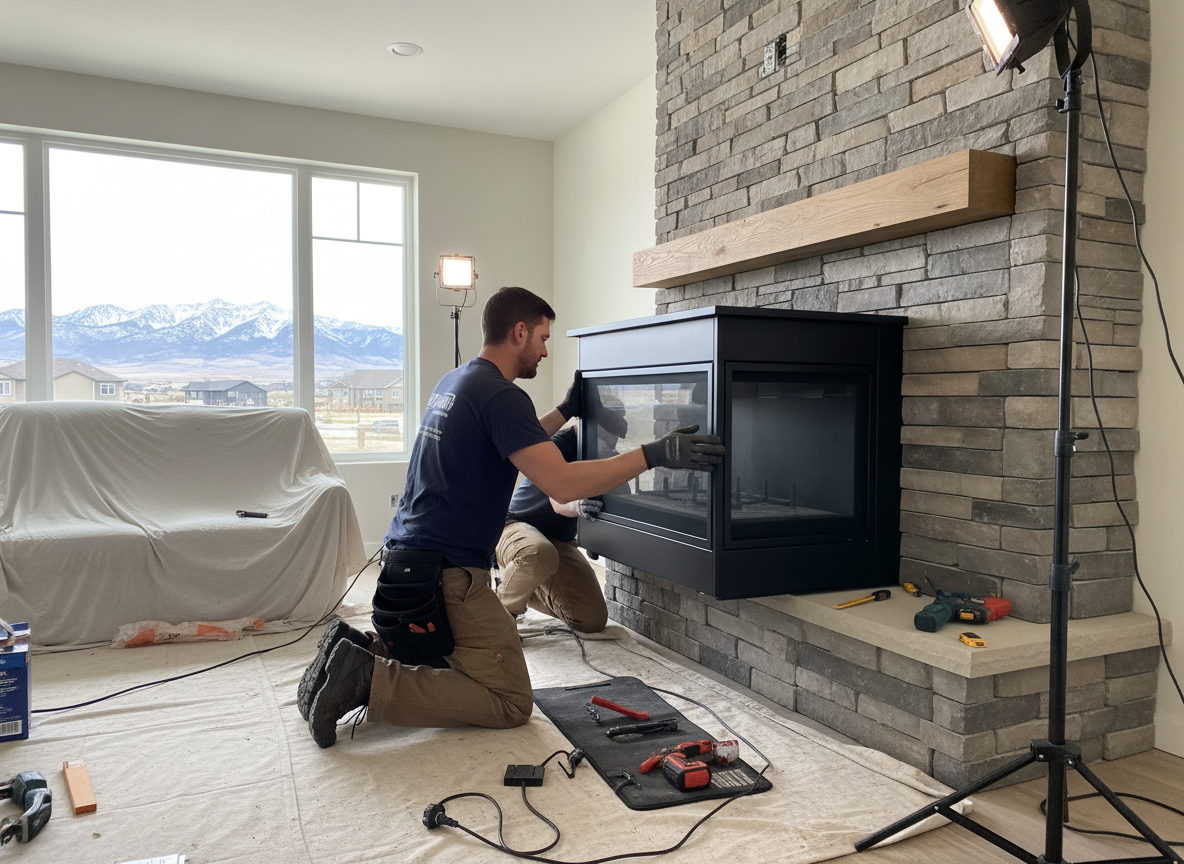
American Fork sits in a semi-arid climate where winters bring sharp temperature drops and canyon winds that push smoke back into homes when a fireplace is poorly drafted. Installing a new unit here requires matching the chimney height to the roof pitch common on older homes near American Fork City Hall and accounting for the prevailing winds that sweep down American Fork Canyon. We size flues to handle both wood and gas inserts while meeting Utah state mechanical code clearances around combustible framing found in many 1970s and 1980s houses in South American Fork.
Terrain and soil conditions also affect the job. Properties backing up to the foothills often sit on sloped lots where the hearth must be raised to keep the firebox level, and we run stainless liners inside existing masonry chimneys to prevent creosote buildup during the long heating season. In neighborhoods like North American Fork, newer construction sometimes uses zero-clearance boxes that need precise framing adjustments before the surround and mantel go on, avoiding the callbacks that occur when expansion joints are ignored.
Homeowners in Highland and Pleasant Grove frequently request direct-vent gas models that eliminate the need for a full chimney chase, yet still require proper termination above the snow line that accumulates on roofs here. We always verify the existing chimney structure can support the added weight and install carbon-monoxide detectors as part of every job because cold-weather inversions trap exhaust near the ground in the American Fork valley.
Technician insight
In American Fork the thing that catches most people out with fireplace installation is the wind load coming straight out of American Fork Canyon. Homes in North American Fork and near the canyon mouth need taller terminations and tighter flashing than the code minimum, or you get smoke spillage every time a winter inversion sets in.
Canyon Wind Draft Issue
A homeowner in South American Fork called after their new insert smoked on windy days. We found the termination sat below the ridgeline and caught direct canyon gusts. We extended the flue, added a wind-resistant cap, and sealed the chase. The fireplace now drafts cleanly even during strong winter outflows.
How it works
- 1
Site Assessment
We measure the existing chimney or proposed chase, check roof pitch, and note wind exposure from the canyon.
- 2
Code Review
We confirm clearances, flue sizing, and hearth requirements against current Utah mechanical code for the specific neighborhood.
- 3
Unit Selection
We match wood-burning, gas, or pellet options to the home's construction style and typical winter fuel use in American Fork.
- 4
Installation
We set the firebox, run the liner or vent, seal all joints, and finish with code-approved surround materials.
- 5
Final Inspection
We test draft under local wind conditions, verify CO detector placement, and walk the homeowner through safe operation.
Pricing
Cost depends on new construction versus retrofit, fuel type, and whether an existing chimney needs lining or height adjustment. Upfront written quotes are provided after the site visit.