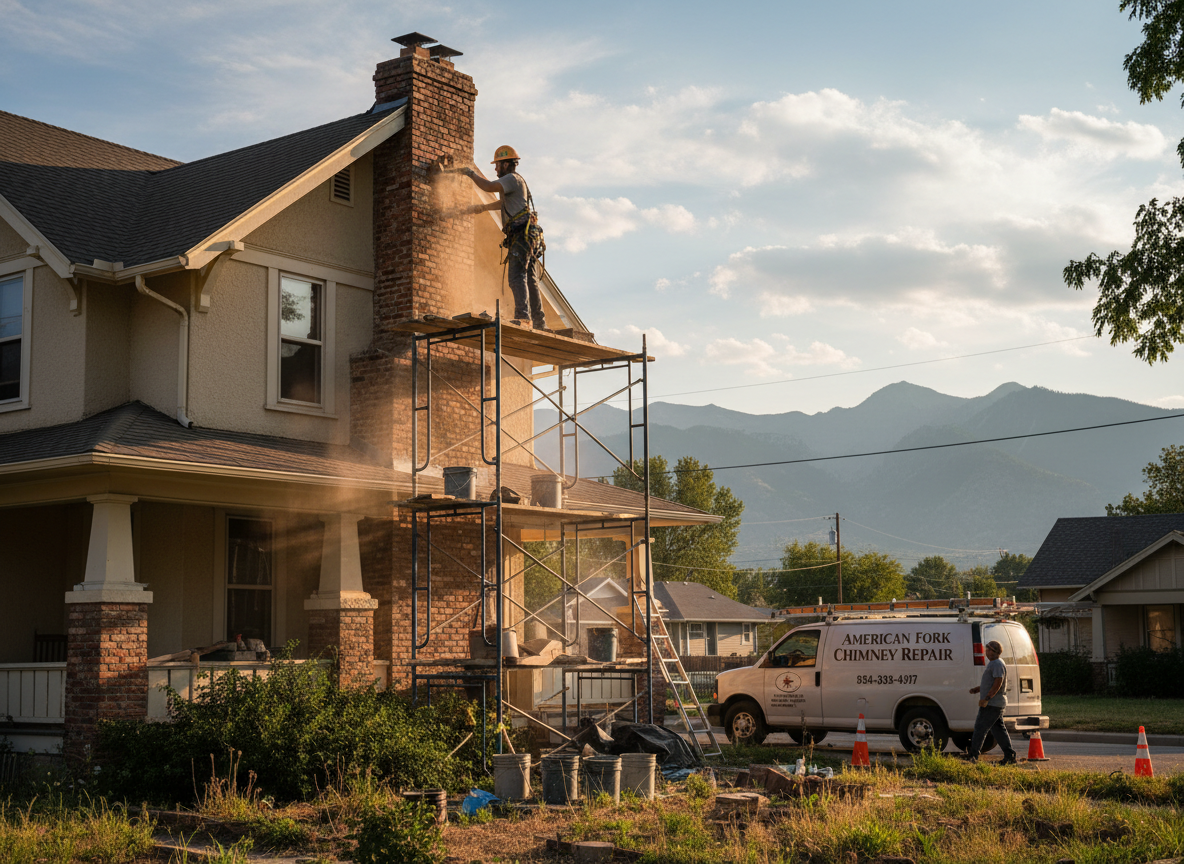
American Fork's semi-arid climate brings sharp winter freezes that expand and crack mortar joints in brick chimneys, especially on homes built before the 1980s in Downtown American Fork and along the American Fork Canyon corridor. Cold air pouring out of the canyon at night accelerates these cycles, and a single heavy snow followed by sun can push failing crowns or flue liners into emergency failure. Technicians here routinely find water that pooled behind loose flashing during summer thunderstorms then froze and spalled the brick faces by January.
When a flue liner cracks or a damper seizes, smoke can backdraft into living spaces within minutes. In North American Fork and South American Fork neighborhoods where homes sit close together, that risk rises because shared rooflines and tall evergreens block normal draft. We carry pre-cut stainless steel liners and high-temp refractory cement on the truck so we can stabilize the chimney the same night rather than leaving a family without heat. Work near Timpanogos Cave or American Fork City Hall often requires extra care with historic masonry that cannot be replaced with modern materials without city review.
High winds that funnel through American Fork Canyon also dislodge chimney caps and rain covers on a regular basis. Once the cap is gone, rain and snow enter the flue and saturate the smoke chamber, creating the perfect conditions for rapid creosote saturation and sudden blockages. Emergency calls spike after the first hard freeze each November because homeowners in Highland and Pleasant Grove who burn wood through shoulder season discover their draft has reversed overnight.
Canyon Wind Effects on Draft
Canyon winds create negative pressure zones around chimneys on the west side of American Fork. A liner that tested fine in calm conditions can fail to draw once those 30 mph gusts hit. We test with a manometer on every emergency visit and often add a wind-resistant cap rather than simply replacing the liner.
Freeze-Thaw Mortar Failure
Older homes near the canyon mouth use lime mortar that absorbs moisture readily. When temperatures swing 40 degrees in a single day, the mortar spalls and lets water reach the flue tile. Spot repointing with the correct lime mix prevents full rebuilds if caught before the shoulder season.
Technician insight
In American Fork, the thing that catches most people out with emergency chimney repair is how canyon winds accelerate creosote and moisture problems in pre-1980 brick chimneys around Downtown and North American Fork; homeowners often think a new cap will fix draft loss when the real issue is saturated mortar joints that have already spalled behind the liner.
Backdraft After First Freeze
A homeowner in North American Fork called after smoke entered the living room during a cold snap. Inspection showed the flue liner had cracked where repeated freeze-thaw cycles from canyon winds had damaged the mortar. We installed a stainless steel liner the same evening and sealed the crown. The chimney now drafts cleanly even during high wind events.
How it works
- 1
Initial Safety Assessment
Arrive on site, confirm CO levels are safe, and inspect the chimney exterior and accessible flue from the roof and cleanout.
- 2
Identify Root Cause
Use camera inspection to locate cracks, blockages, or liner damage caused by freeze-thaw or canyon wind exposure.
- 3
Stabilize the System
Install temporary stainless liner or seal active leaks so the home can safely use the fireplace or furnace the same night.
- 4
Permanent Repair
Complete crown rebuild, full liner installation, or masonry repair with materials matched to the original construction era.
- 5
Final Draft and Safety Check
Re-test draft under load, clear remaining debris, and confirm the system meets current Utah residential code requirements.
Pricing
Emergency calls outside normal hours carry a dispatch fee; all work is quoted on site after inspection with no obligation to proceed.