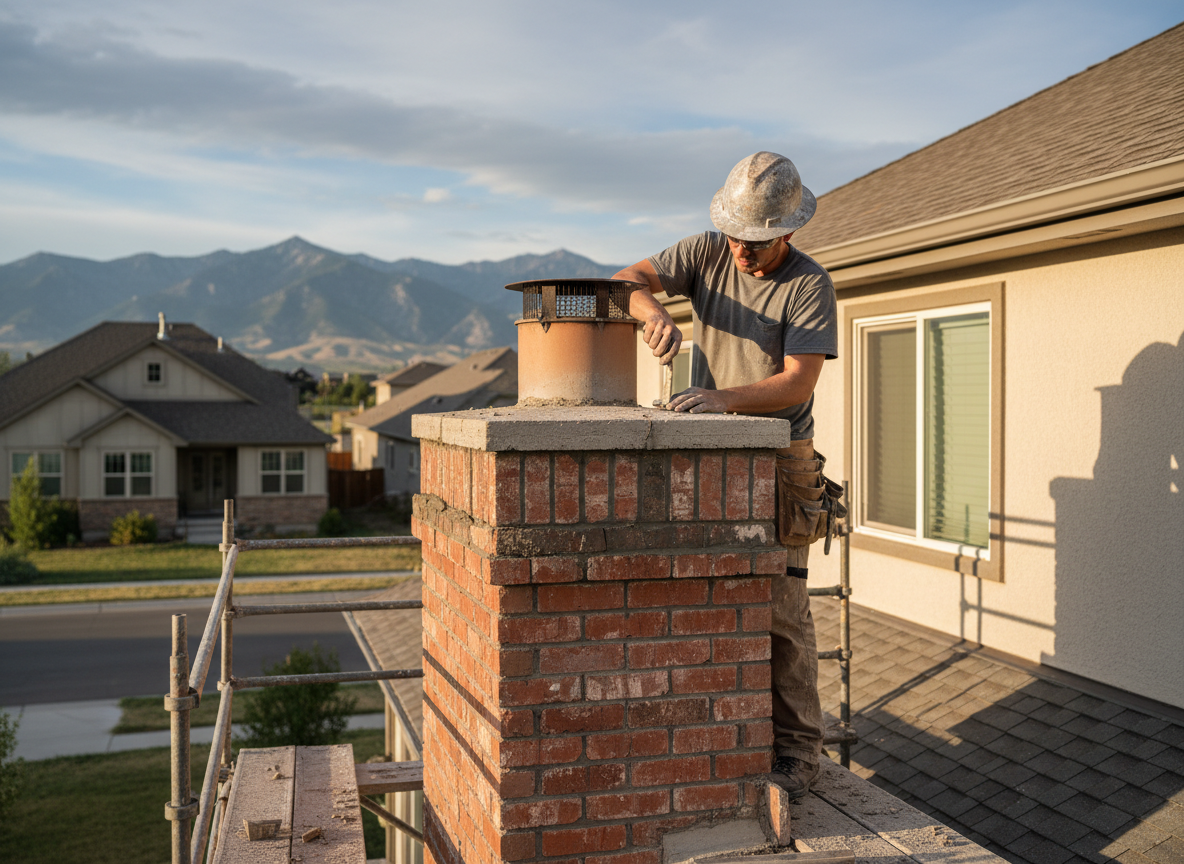
Chimney tuckpointing addresses the mortar joints that hold together brick chimneys common in American Fork homes built before the 1990s. Utah’s semi-arid climate brings hot summers followed by cold winters where temperatures swing below freezing at night. Water enters hairline cracks in the mortar, freezes, and expands, pushing joints apart. This cycle repeats each year and is especially noticeable on chimneys exposed to wind on the American Fork Canyon side of town. Proper tuckpointing removes the failed mortar to a consistent depth, cleans the joint, and packs in fresh mortar matched to the original color and hardness so the chimney can handle another twenty or thirty winters.
In neighborhoods such as North American Fork and near American Fork City Hall, many chimneys sit on two-story brick homes with limited roof access. The work requires scaffolding or ladders positioned on sloped yards that drain toward the foundation. Technicians must watch for shifting soil common in this part of Utah County and secure equipment so it does not settle during the multi-day job. Matching the new mortar to the old prevents moisture from being trapped behind harder modern mixes, a common failure point when homeowners attempt DIY repairs with the wrong product.
Tuckpointing also protects the flue liner and prevents water from reaching the attic or living space below. In South American Fork and Highland, older chimneys often serve wood-burning fireplaces that see heavy use during inversions. Damaged joints allow creosote and water to combine inside the flue, accelerating corrosion of the liner. A thorough tuckpointing job includes checking for missing or cracked bricks at the crown and flashing, because those areas funnel water straight into the wall if left open.
Seasonal Timing
Scheduling tuckpointing between late spring and early fall avoids the worst freeze-thaw period. Crews from Warmstone Services at 775 Grassland Dr work 24/7 year-round for emergencies, but planned tuckpointing moves faster when temperatures stay above freezing so the new mortar cures correctly before the first hard frost.
Technician insight
In American Fork, the thing that catches most people out with chimney tuckpointing is how quickly the freeze-thaw cycle in our cold winters destroys mortar on the north-facing side of chimneys near American Fork Canyon. Homeowners often notice only the south side and miss the hidden damage until water reaches the attic.
North American Fork Tuckpointing
A homeowner in North American Fork noticed white powder on the fireplace hearth after a winter storm. Inspection showed open joints on three sides of the chimney where mortar had washed out. We removed the loose material, repointed with a lime-based mix matched to the original, and sealed the crown. No further water entered the home the following winter.
How it works
- 1
Site Inspection
Examine every joint from crown to roofline, note loose or missing mortar, and check for water staining inside the attic.
- 2
Mortar Removal
Cut out deteriorated mortar to a uniform depth without damaging surrounding brick, then vacuum debris from the joints.
- 3
Joint Preparation
Flush joints with water to remove dust and ensure the new mortar bonds to both brick and existing mortar.
- 4
Mortar Application and Finishing
Pack fresh mortar into the joints in layers, tool to a concave profile, and clean excess from the brick faces.
Pricing
Pricing varies with chimney height, number of sides requiring work, and extent of brick damage; we provide an upfront quote after inspection.