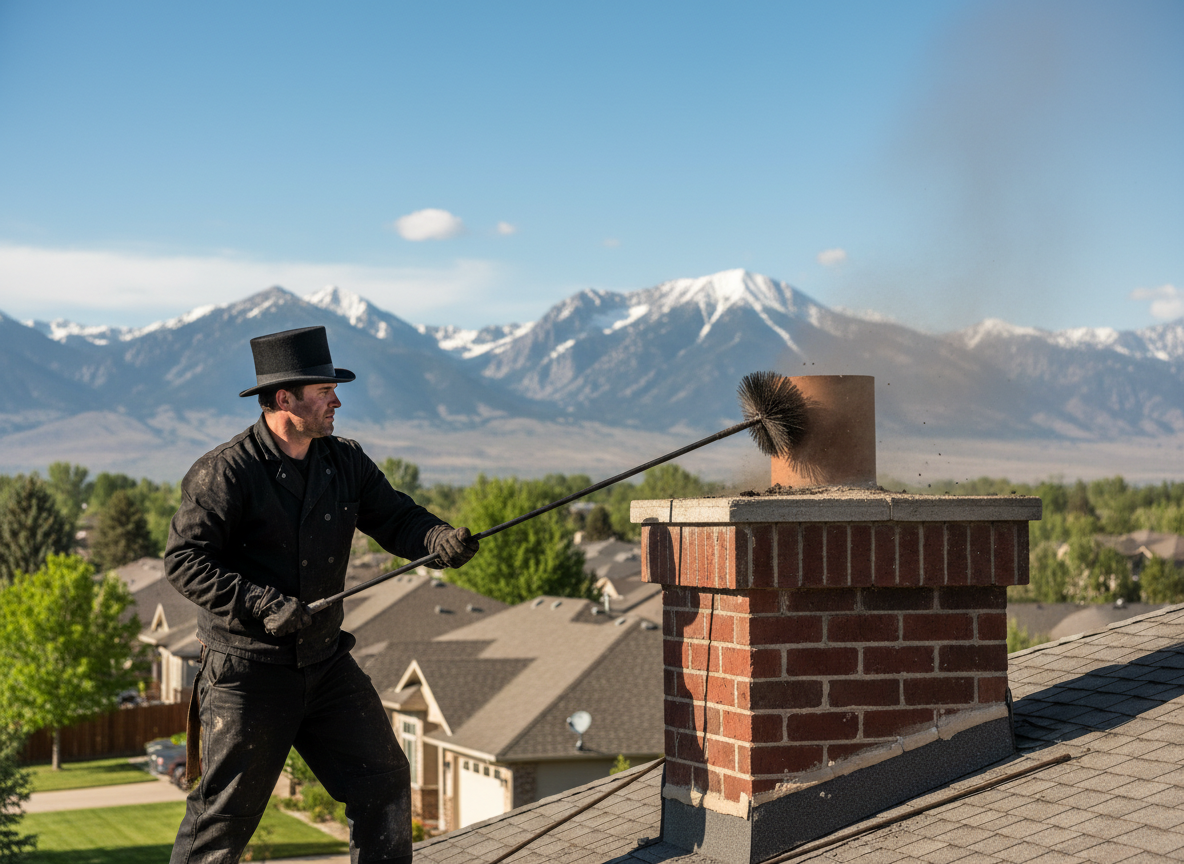
American Fork winters drop below freezing for weeks, driving homeowners to burn wood more often than in milder Utah County spots like Lehi or Pleasant Grove. This creates dense creosote layers inside flues, especially in older brick chimneys common in Downtown American Fork and South American Fork neighborhoods. A proper sweep removes these deposits before they harden into Stage 3 glaze that standard brushes cannot reach.
Homes near American Fork Canyon and the Timpanogos Cave area often sit on sloped lots with chimneys exposed to strong canyon winds. Wind-driven rain and snow enter uncapped flues, mixing with soot to form acidic slurry that erodes mortar joints. Sweep crews must check for water staining and recommend stainless steel caps sized for the specific flue dimensions found in these hillside properties.
City code in American Fork requires spark arrestors on all wood-burning appliances. During a sweep, technicians inspect for missing or damaged arrestors and note violations that could affect insurance claims. They also clear nests from the American Fork Canyon area birds that frequently block flues in spring, preventing dangerous carbon monoxide backdraft into living spaces.
Semi-arid summers here produce fine dust that settles inside chimneys, combining with winter creosote to create stubborn blockages. Sweeps performed before November reduce the risk of chimney fires that spread quickly through the close-set older homes found near American Fork City Hall.
Technician insight
In American Fork, the thing that catches most people out with chimney sweep is how fast creosote turns to hard glaze when homes sit in the cold air that pools in the canyon mouths. Older brick chimneys in Downtown and South American Fork trap moisture from canyon winds, so a standard sweep often reveals hidden mortar damage that needs attention before winter.
Blocked Flue Near American Fork Canyon
Homeowner in North American Fork reported slow draft and smoke in the living room during the first cold snap. The sweep crew found a bird nest combined with heavy creosote blocking the flue. They cleared the obstruction, removed the creosote, and confirmed proper draft before leaving.
How it works
- 1
Schedule and Inspect
Confirm appointment and perform external visual check for obstructions or damage before entering the home.
- 2
Protect Work Area
Lay drop cloths and seal the fireplace opening to contain soot during the sweep.
- 3
Remove Deposits
Use rotary brushes sized for the flue to clear creosote and debris from top to bottom.
- 4
Final Check and Clean
Vacuum remaining particles, inspect for cracks, and remove all protective coverings.
Pricing
Pricing depends on chimney height, number of flues, and creosote level. Upfront quotes provided before work begins.