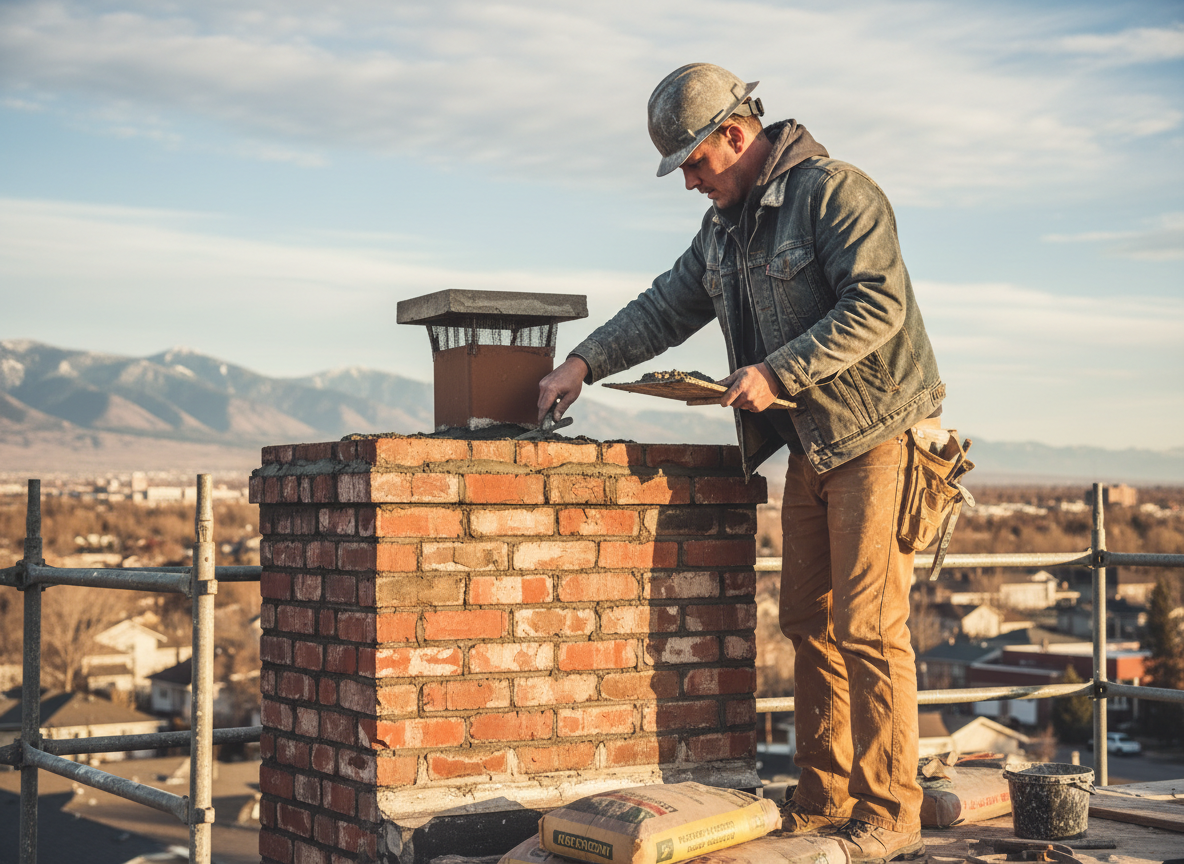
American Fork chimneys take a beating from the county's cold winters and hot summers. Mortar joints in brick stacks along North American Fork and near Timpanogos Cave often crack when moisture freezes and expands, then bakes out in summer. Older homes in Downtown American Fork commonly have original lime-based mortar that has become soft and powdery after decades of exposure. We repoint using Type N or S mortar matched to the existing brick to avoid trapping moisture behind harder modern mixes that can spall the faces.
Wind-driven rain from American Fork Canyon and occasional heavy snow loads on roofs near Pleasant Grove and Highland push water into hairline cracks that homeowners miss from the ground. Once water reaches the flue liner or crown, it accelerates deterioration of both mortar and flue tile. We always check the crown, flashing, and rain cap during every mortar repair because ignoring those details simply moves the leak point a few courses higher or lower. Lehi homes on the bench see similar issues but with more dust infiltration that can clog weeps if new mortar is too wet during application.
Edge cases we see regularly include chimneys on homes backing up to the canyon where constant shade keeps mortar damp longer, slowing cure times and requiring extra protection from afternoon winds. South American Fork properties near the creek sometimes contend with higher soil moisture wicking up the base of the stack. We never apply new mortar over loose or crumbling joints without first cutting out to sound material, and we warn homeowners that painting over repaired mortar can trap salts and cause future spalling.
Utah code requires proper flashing integration when mortar work reaches the roofline, and we coordinate with roofers when the job crosses that line. Homeowners in Highland often ask about DIY tuck-pointing kits sold at big-box stores; those pre-mixed tubs rarely match the absorption rate of local brick and fail within two seasons. We document every joint we touch so future owners know exactly what was addressed.
Technician insight
In American Fork the thing that catches most people out with chimney mortar repair is assuming the problem stops at the first cracked joint they can see from the yard. Freeze-thaw cycles along the canyon side of North American Fork keep pushing moisture deeper into the stack, so we routinely find soft mortar two or three courses behind the obvious damage once we start cutting.
Cracked Joints on South-Facing Stack
A homeowner in South American Fork noticed white staining on the interior chimney breast after a cold snap. We found multiple open joints on the south face where summer sun had dried the mortar and winter freeze had popped it loose. We cut out and repointed the affected area plus the crown perimeter, then protected the fresh work through a forecast warm spell. The staining stopped and the homeowner reported no further moisture issues the following winter.
How it works
- 1
Initial Inspection
We examine every accessible joint from roof to cleanout, checking for loose brick, water staining, and crown condition while noting exposure to canyon winds or shade.
- 2
Joint Removal
Old mortar is cut out to a minimum ½-inch depth using hand tools to avoid damaging brick edges common on older American Fork stacks.
- 3
Mortar Mixing and Application
Fresh mortar is mixed on site to match existing color and strength, then packed firmly into joints with proper tooling for a concave finish that sheds water.
- 4
Curing and Protection
We cover the work during hot summer days or cold nights to control moisture loss and return for final inspection once the mortar has cured.
Pricing
Upfront quotes after on-site inspection; cost varies with chimney height, number of sides requiring work, and access on American Fork roofs.