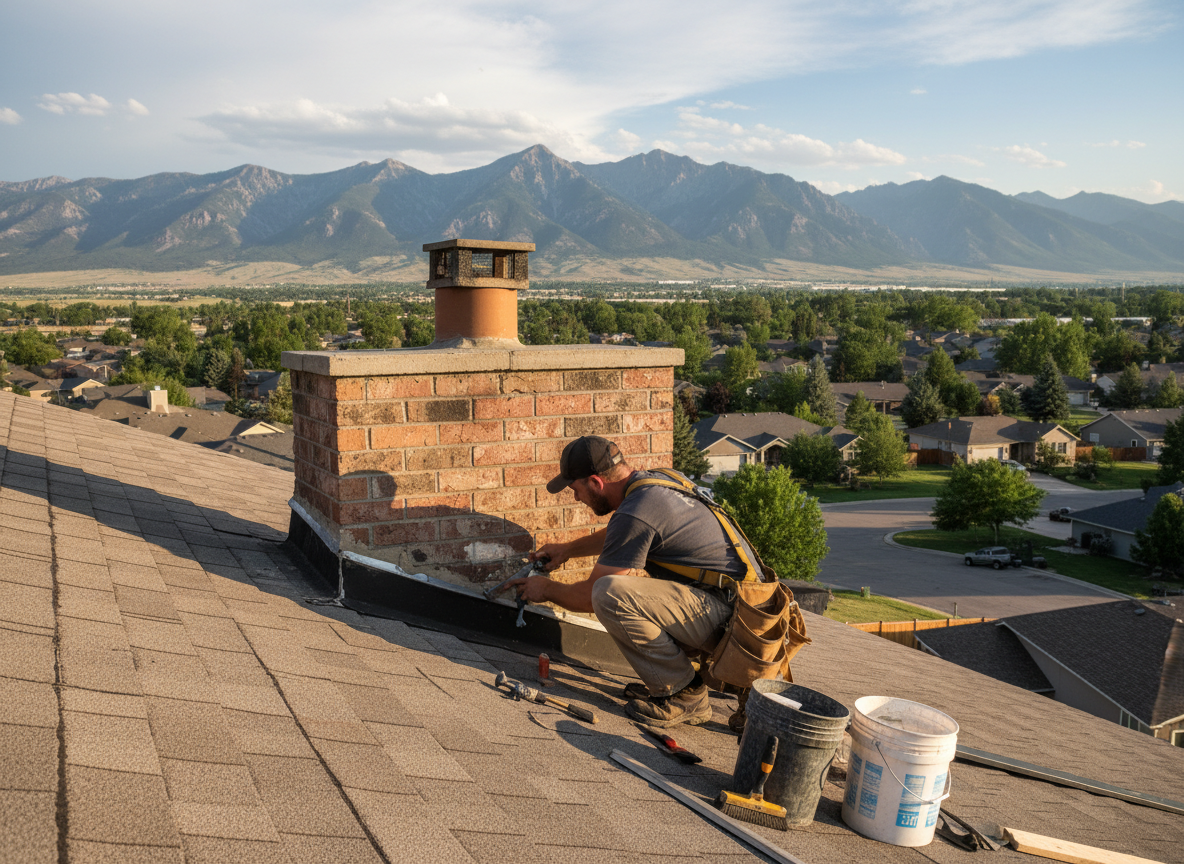
American Fork sits in a semi-arid climate where hot summers bake masonry and cold winters drive repeated freeze-thaw cycles that open cracks in flue tiles and crown mortar. Homes in Downtown American Fork and the older sections of North American Fork often have brick chimneys built before modern flashing standards, so water finds its way behind the brick and into attics during spring snowmelt from American Fork Canyon. A leak here rarely shows at the roofline first; it usually appears as staining on ceilings two or three floors below after heavy canyon runoff.
Repair work in this area must account for the steep terrain and wind-driven rain that funnels through the canyon mouth toward Pleasant Grove and Highland. We use stainless-steel step flashing tucked under existing shingles, then seal the crown with a flexible, high-temperature refractory coating rather than standard mortar that will crack again the next winter. Edge cases include shared chimneys on duplexes near American Fork City Hall where one homeowner's neglected crown affects both units, and Timpanogos Cave area homes where pine needle debris holds moisture against the masonry for months.
Code compliance in Utah County requires proper cricket construction on chimneys wider than 30 inches and positive drainage away from the flue. Skipping these details during repair leads to repeated callbacks when winter winds push snow under the flashing. Homeowners in Lehi and South American Fork frequently discover the issue only after insulation becomes saturated, turning a small crown crack into a full attic remediation project.
Seasonal Guidance
Schedule inspections before the first hard freeze in late fall. Summer heat expands metal flashing differently than the masonry it protects, so any movement left unrepaired becomes a leak path once temperatures drop below freezing.
Technician insight
In American Fork, the thing that catches most people out with chimney leak repair is the way snow from American Fork Canyon sits against the north side of the crown for weeks; that constant moisture wicks straight into the older lime mortar used on homes built before the 1980s in North and South American Fork.
Canyon Wind-Driven Leak
Homeowner in the American Fork Canyon area noticed ceiling stains after a spring storm. We found wind-driven snow had forced water under the original flashing where the chimney met the steep roof pitch. New stainless flashing and a rebuilt crown stopped the intrusion; the attic dried without insulation replacement.
How it works
- 1
Site Assessment
Walk the roof and attic in American Fork neighborhoods to trace water stains back to the chimney base or crown.
- 2
Moisture Mapping
Use infrared imaging to locate hidden saturation behind brick in older Downtown American Fork homes.
- 3
Flashing and Crown Repair
Install new step flashing and a reinforced refractory crown cap designed for Utah's freeze-thaw cycles.
- 4
Final Water Test
Apply controlled water flow to confirm the leak path is sealed before leaving the property.
Pricing
Pricing varies by chimney height, access difficulty on sloped canyon lots, and whether brick repair is required alongside the leak fix.