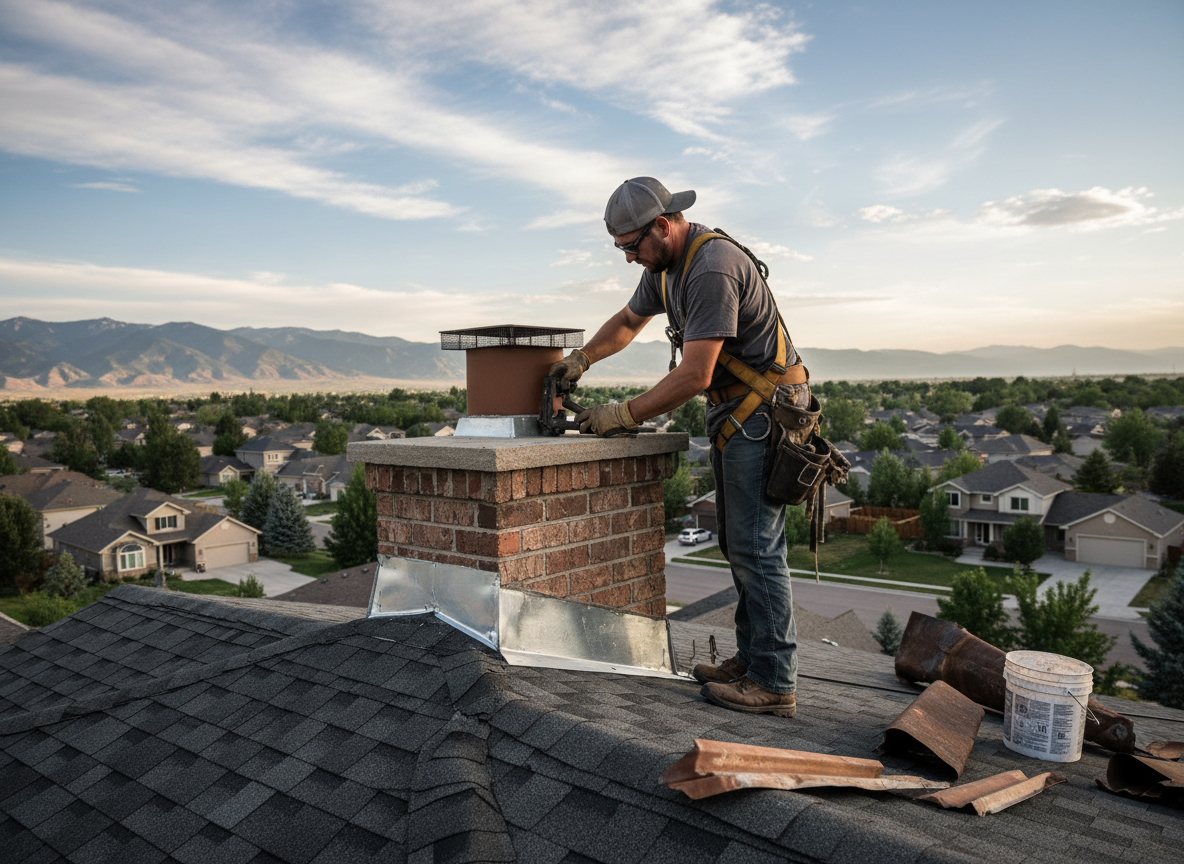
American Fork homes in Downtown and older sections of North American Fork often have original flashing that has pulled away after decades of exposure to the region's cold winters. Temperatures drop sharply once winter arrives, causing metal to contract while the surrounding masonry stays rigid. This movement opens seams that allow snowmelt to enter the attic. Homes near American Fork Canyon face extra stress from stronger winds that drive moisture under loose edges. Warmstone Services examines the counter flashing, step flashing, and cricket details on site before any repair begins.
We use 26-gauge galvanized or copper flashing matched to the existing roof pitch and chimney crown. In South American Fork neighborhoods where many roofs are asphalt shingle, we integrate new flashing with existing underlayment rather than relying on sealant alone. Edge cases include stucco chimneys common in Highland-adjacent areas where the stucco has cracked at the flashing line; these require removal of damaged stucco before new flashing can be set in mortar. We also check for improper cricket angles that funnel water toward the chimney instead of away from it.
Utah building practices require flashing to extend at least six inches up the chimney and four inches under the shingles. Many older American Fork properties near Timpanogos Cave predate current code and have flashing set too low, allowing water to bypass the layer. During repair we correct these heights and ensure weep holes remain clear so trapped moisture can escape. Homeowners in Pleasant Grove and Lehi often discover issues only after ceiling stains appear, because the semi-arid summers mask slow leaks until the first heavy snow.
Seasonal Considerations
Cold-weather repairs in American Fork require temporary tarping and heat application to keep sealants workable. We schedule most flashing work in shoulder seasons when daytime temperatures stay above freezing but before canyon winds pick up.
Technician insight
In American Fork, the thing that catches most people out with chimney flashing repair is how the freeze-thaw cycles along the American Fork Canyon corridor crack sealant on older homes faster than in Lehi or Pleasant Grove; the wind funnels moisture under the flashing before homeowners notice any interior staining.
Flashing Failure on South American Fork Chimney
A homeowner in South American Fork noticed ceiling stains after the first winter snow. We found the step flashing had lifted at the cricket due to repeated contraction. We replaced the flashing and cricket with proper overlaps and corrected the angle to shed water. No further leaks occurred the following season.
How it works
- 1
On-Site Assessment
We inspect the flashing, counter flashing, and cricket from the roof and attic, noting any water staining or mortar deterioration specific to American Fork's older housing stock.
- 2
Material Selection
We match new flashing to the roof type and existing metal while accounting for thermal movement from local freeze-thaw cycles.
- 3
Removal and Preparation
Old flashing is carefully removed, damaged underlayment replaced, and the chimney surface cleaned so new flashing can seat properly against masonry.
- 4
Installation and Sealing
New step and counter flashing is installed with correct overlaps, then sealed at the top edge with compatible caulk rated for Utah temperature swings.
- 5
Final Water Test
We run a controlled water test to confirm no penetration occurs before leaving the site.
Pricing
Cost depends on chimney height, roof access, and whether masonry repair is also needed; we provide an upfront quote after the site visit.