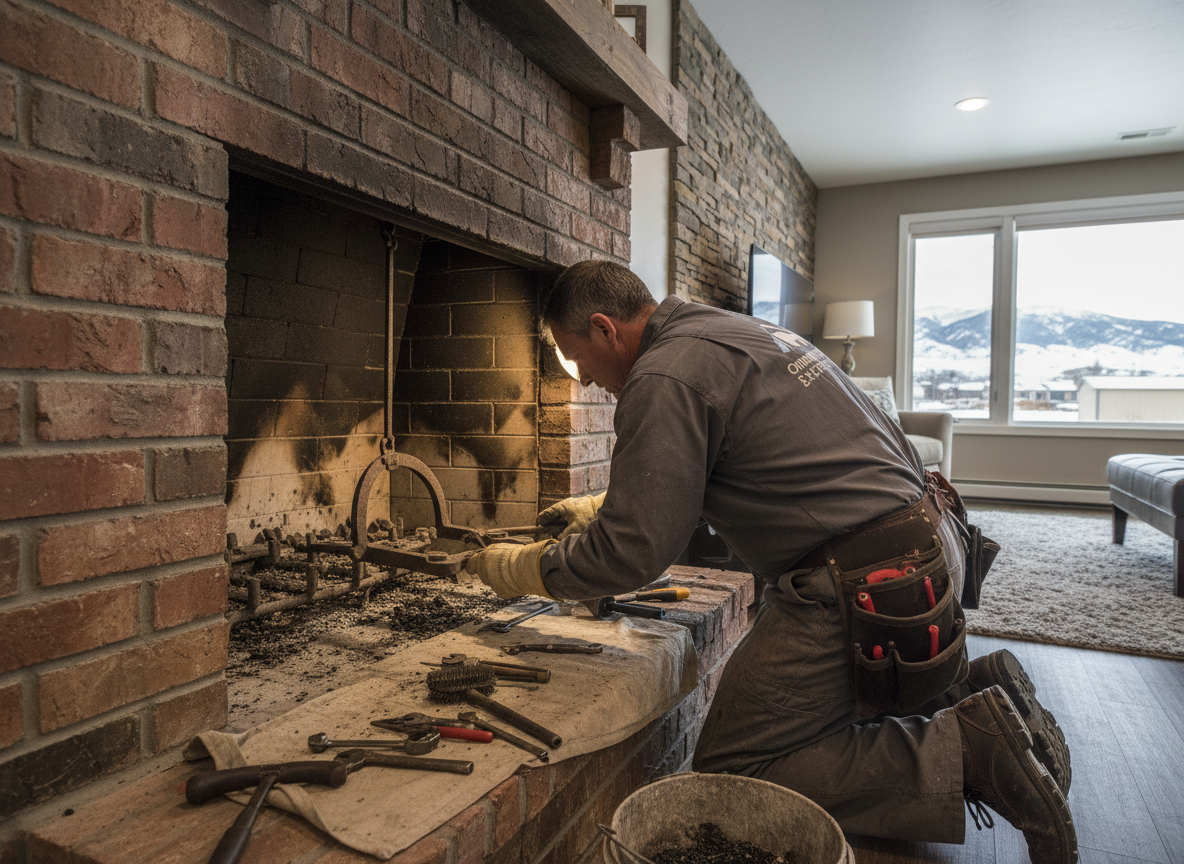
American Fork sits in a semi-arid climate with hot summers and cold winters that drive rapid temperature swings. These swings cause condensation inside flues, especially in homes near American Fork Canyon and Timpanogos Cave where cooler air lingers. Older housing stock in Downtown American Fork and North American Fork often has cast-iron or steel dampers that corrode faster than newer units in South American Fork developments. A seized or warped damper lets cold air pour down the chimney and forces the furnace to work harder once winter temperatures drop.
Damper repair work here frequently involves replacing the entire plate or the pivot rod rather than simple cleaning. Rust scale from repeated freeze-thaw cycles can bind the mechanism so tightly that the rod shears during attempted operation. Homes near American Fork City Hall and along the canyon road also see more creosote buildup because shorter burn cycles in shoulder seasons leave damper surfaces wet. Technicians must check both the smoke chamber and the throat for hidden corrosion before declaring the damper serviceable.
Utah wind loads and occasional heavy snow on roofs add another layer. Snow melt running down the flue can reach the damper and freeze the plate shut overnight. In Lehi and Pleasant Grove homes with two-story chimneys the extra height increases draft pull, which can pull a partially stuck damper open even when the handle is set. Proper repair includes verifying the new damper seats fully closed and testing draw with a smoke pencil rather than relying on the handle position alone.
Seasonal Guidance
Winter calls for pre-season checks before first snow. Summer inspections focus on confirming the damper still moves freely after months of heat expansion and contraction. Homeowners in Highland often request stainless replacements because the higher elevation brings slightly more moisture retention in the flue.
Technician insight
In American Fork the thing that catches most people out with chimney damper repair is how quickly canyon moisture and winter freeze-thaw cycles rust the pivot rod in older Downtown and North American Fork homes. Homeowners often try to force the handle and shear the rod, turning a simple plate swap into a full throat rebuild.
Stuck Damper Near American Fork Canyon
Problem: Homeowner in a 1970s house near American Fork Canyon reported the damper would not close after the first cold snap. We found heavy rust on the rod from condensation. What we did: Replaced the plate and rod with stainless parts and added a new seal. Outcome: Damper now closes fully and draft is controlled without heat loss.
How it works
- 1
Initial Access and Visual Check
Open the damper from the firebox and inspect the plate, rod, and stops for corrosion or warping common after American Fork winters.
- 2
Test Operation and Draft
Cycle the damper through full range while monitoring smoke movement to locate binding points caused by moisture or creosote.
- 3
Component Replacement or Adjustment
Replace rusted plate or rod with corrosion-resistant parts suited to Utah temperature swings and reseal the throat area.
- 4
Final Verification
Confirm full closure, proper draft, and no air leakage before leaving the site.
Pricing
Cost depends on whether only cleaning is needed or full damper replacement is required, plus chimney height and access in American Fork neighborhoods.