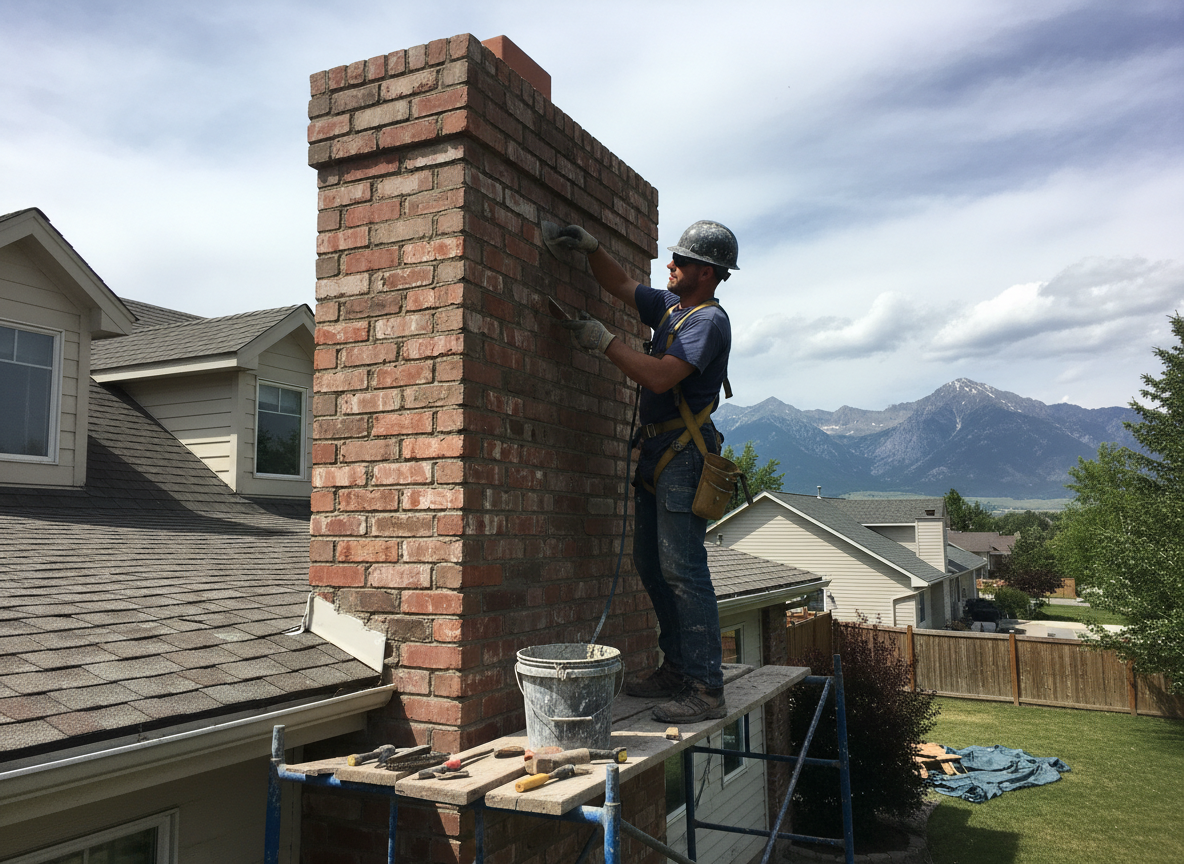
Brick chimneys in American Fork take steady abuse from the region's semi-arid climate. Hot summer days expand the bricks while cold winter nights contract them, opening mortar joints along the crown and flue. Homes in North American Fork and near American Fork City Hall often show stepped cracking where water enters and freezes. Crews working these addresses routinely cut out failed mortar, install new Type N or S mortar matched to the original, and install a chimney cap to limit further water entry.
South American Fork and the American Fork Canyon area present different access challenges. Steeper lots and older brick homes built before modern flashing standards mean crews must work around tight clearances and sometimes stage equipment on canyon roads. Lehi and Pleasant Grove customers with similar brick stacks call when wind-driven rain from the west pushes water behind the crown. Repair here includes rebuilding the crown with a proper slope, replacing spalled bricks, and sealing the interface where the chimney meets the roof deck.
Highland homes with two-story brick chimneys add another layer. Wind exposure on the bench accelerates soot staining and joint erosion. Technicians inspect for loose bricks that could fall during the next freeze, then repoint or rebuild the affected courses. All work follows Utah residential code requirements for chimney height above the roof plane and clearance to combustibles. Homeowners receive photos of the hidden damage found once the crown is opened so they understand why the repair scope expanded.
Technician insight
In American Fork the thing that catches most people out with brick chimney repair is how fast the freeze-thaw cycles on the bench destroy mortar joints on south-facing chimneys. Homes in North American Fork and near the canyon mouth get hit hardest because afternoon sun warms the bricks then overnight drops below freezing pull the joints apart. Skipping the crown rebuild and cap during the first repair almost always means a second call within two winters.
Open Joints on Two-Story Brick Chimney
Homeowner in South American Fork noticed white staining on the interior wall after a heavy snow. Inspection showed eroded mortar and a sunken crown allowing water to track down the flue. Crew rebuilt the crown, repointed all joints, and installed a new cap. No further staining appeared the following winter.
How it works
- 1
On-Site Assessment
Technician climbs and photographs the full chimney exterior and interior flue, checking for spalled bricks, open mortar joints, and crown condition while noting roof pitch and access routes.
- 2
Mortar and Brick Evaluation
Joints are probed to determine depth of deterioration; loose or cracked bricks are marked for replacement or rebuilding based on structural integrity.
- 3
Repair Execution
Failed mortar is cut out to sound material, new mortar is installed, damaged bricks are swapped, and the crown is rebuilt with proper slope and flashing integration.
- 4
Final Inspection and Cap Installation
Chimney is rechecked for water shedding, a new cap is fitted, and the homeowner receives a written summary with photos of the completed work.
Pricing
Cost depends on chimney height, number of courses needing rebuild, and roof access difficulty in canyon or bench locations.