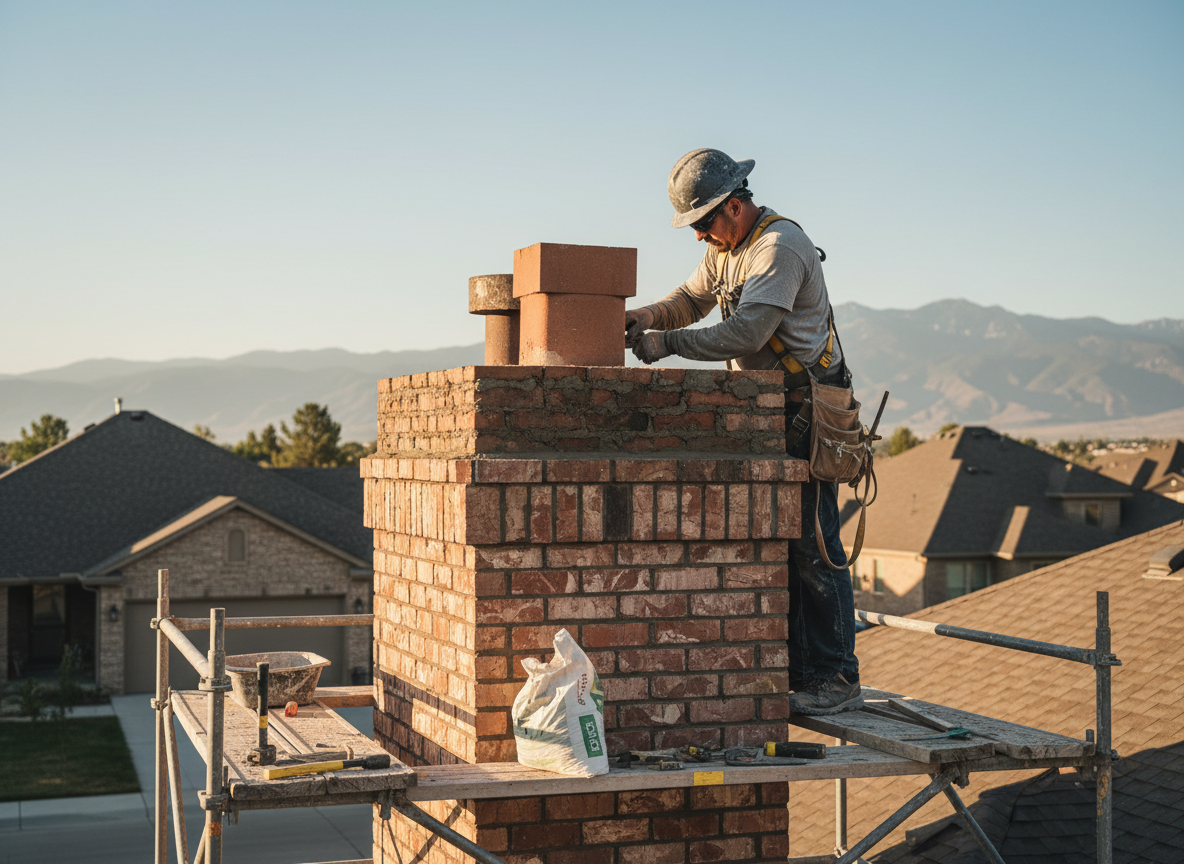
American Fork sits in a semi-arid climate where summer heat gives way to sharp winter freezes that expand and contract mortar joints and flue liners. Homes in Downtown American Fork and older sections of North American Fork often have brick chimneys installed before modern code requirements for stainless liners. These stacks develop hairline cracks that allow water intrusion during spring snowmelt, leading to spalling brick and rusted flue connections. Warmstone Services inspects crown integrity, flashing at the roofline, and interior creosote buildup that accelerates when cold downdrafts pull smoke back into living spaces.
Terrain near American Fork Canyon and Timpanogos Cave increases wind exposure on south-facing roofs, pushing water under standard mortar caps faster than in sheltered Lehi or Pleasant Grove neighborhoods. South American Fork properties on sloped lots frequently show separation at the chimney-to-roof transition because soil movement from irrigation runoff shifts foundations slightly each season. Technicians check for these movement indicators during every service call rather than assuming a simple patch will hold. Proper repair includes installing a new concrete or stone cap with a drip edge and resealing the flue collar with high-temperature silicone rated for repeated freeze cycles.
Utah building practices in the 1970s and 1980s left many chimneys without adequate clearance to combustibles or proper rain protection. When a homeowner in Highland or Pleasant Grove reports odor or white residue on interior walls, the cause is often deteriorated clay tile that has allowed acidic condensate to eat through the surrounding brick. Warmstone Services removes loose material, installs a cast-in-place liner when the original tile cannot be saved, and verifies draft with a smoke test before closing the job. This approach prevents recurrence during the next hard freeze when unlined flues are most likely to fail.
Seasonal Considerations
Cold nights below freezing followed by daytime thaws in American Fork create the exact expansion pressure that opens new cracks each March. Scheduling an inspection before the first hard freeze allows repairs while access is still easy and before snow accumulation blocks roof work.
Technician insight
In American Fork, the thing that catches most people out with chimney repair is how quickly freeze-thaw cycles open new cracks in pre-1990 brick stacks once the protective crown fails. Homes in Downtown American Fork and along the canyon road see this every winter because wind funnels moisture under the old cap faster than in flatter parts of Lehi or Pleasant Grove. Checking the crown condition before the first hard freeze prevents the water that later freezes and pops the mortar joints.
Crown Failure on North American Fork Home
Homeowner noticed white powder on the fireplace surround after a January thaw. Inspection revealed a cracked crown allowing meltwater into the flue. Crew removed the failed cap, installed a new concrete crown with extended drip edge, and resealed the flue collar. Draft test confirmed clean exhaust even during canyon winds, and the interior staining stopped.
How it works
- 1
Site Inspection
Technician examines exterior brick, crown, flashing, and interior flue condition from the 775 Grassland Dr base before traveling to Downtown American Fork or canyon-area homes.
- 2
Diagnosis
Identify whether damage stems from freeze-thaw cycles, wind-driven rain near Timpanogos Cave, or settling on sloped South American Fork lots.
- 3
Material Selection
Choose stainless liner, refractory mortar, or precast cap suited to the semi-arid temperature swings common in Utah County.
- 4
Repair Execution
Remove failed mortar, install new cap and flashing, then test draft to confirm smoke exits cleanly under local wind conditions.
- 5
Final Verification
Walk homeowner through the completed work and note any future monitoring points created by American Fork's winter weather patterns.
Pricing
Upfront quote provided after on-site inspection; final cost depends on liner length, access difficulty on canyon properties, and extent of brick replacement needed.