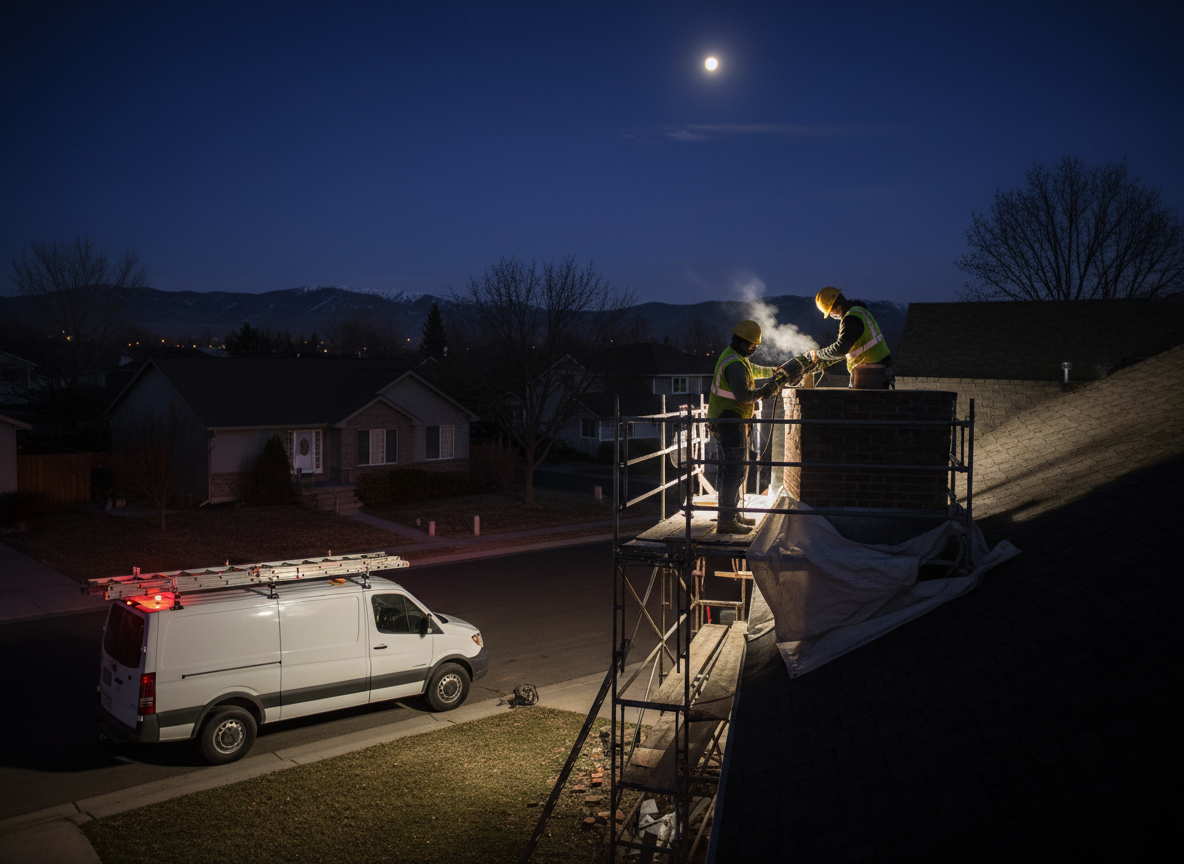
American Fork sits in a semi-arid zone where hot summers give way to sharp winter freezes that drive moisture into brick and mortar joints along chimneys. Homes in Downtown American Fork and older sections of North American Fork often carry original masonry stacks that have seen decades of thermal cycling, leading to spalled bricks and loose flue tiles that allow smoke and creosote to escape into attics. Technicians at Warmstone Services respond at any hour from the base at 775 Grassland Dr to stabilize these stacks before wind-driven rain from American Fork Canyon worsens the separation.
South American Fork properties near the canyon mouth face additional stress from gusts that push debris and snow into caps, accelerating crown erosion on limestone and concrete. Lehi and Pleasant Grove crews frequently see similar patterns, but American Fork’s mix of older ranch-style homes and newer builds on sloped lots creates unique access challenges when scaffolding must be set on uneven terrain. Proper tuck-pointing with lime-based mortar matched to the original mix prevents future cracking that Portland-cement repairs often cause in this climate.
Winter Freeze-Thaw Realities
Freeze-thaw cycles in Utah County repeatedly expand water trapped in chimney crowns and flue liners, turning small hairline cracks into full separations within a single season. Homeowners in Highland and Pleasant Grove sometimes attempt temporary tarps that trap moisture instead, accelerating rot in nearby roof decking. A 24/7 response allows inspection before the next storm locks in the damage.
Technician insight
In American Fork, the thing that catches most people out with 24/7 chimney repair is the way freeze-thaw cycles along the canyon corridor open mortar joints on the north-facing side of stacks first. Older homes in Downtown American Fork often have single-wythe brick that looks solid from the ground but has already lost bond behind the flue tiles, so a quick visual misses the real failure point until we drop a camera or remove the crown.
Canyon Wind Damage on North Side Stack
A homeowner in North American Fork noticed smoke odor after a heavy snow. We found the crown had separated on the canyon-facing side where repeated freeze-thaw had pushed mortar out. We rebuilt the crown with proper slope, repointed the exposed joints, and reinstalled a new cap rated for high wind. The chimney now drafts cleanly and the attic stayed dry through the next storm.
How it works
- 1
Emergency Dispatch
Answer the call from American Fork or nearby Lehi and schedule an immediate visit from the 775 Grassland Dr location.
- 2
Safety Assessment
Inspect the stack, flue, and surrounding roof structure for active leaks, loose masonry, or carbon monoxide pathways.
- 3
Stabilization
Temporarily secure damaged sections and install weather barriers to protect the interior until full repair.
- 4
Permanent Repair
Rebuild or repoint masonry, replace flue tiles, and restore the crown using materials suited to local freeze-thaw exposure.
- 5
Final Check
Test draft, verify clearances, and confirm the chimney meets current Utah County venting standards.
Pricing
Upfront quotes after on-site inspection; final cost depends on height, extent of masonry damage, and roof access in canyon-adjacent neighborhoods.